

Greer vs. Simpsonville, SC: Which Fits Your Everyday Life?
When my family moved to the Upstate from Florida, we didn’t have a chance to explore neighborhoods before selling our house. We found a rental in Greer on Facebook, packed up, and moved without really knowing the area.
As it turned out, we landed in a part of Greer near Greenville’s Eastside. Haywood Mall and Pelham Road were close, we found a church in Greer, and we could get to downtown Greer or head into Greenville without making a day of it. After church, lunch along Wade Hampton Boulevard became an easy part of our routine.
That experience taught me something I still tell relocation buyers: the name of the town matters less than where your home sits within it. That’s especially true when you’re comparing Greer and Simpsonville.
Both offer established neighborhoods, new construction, everyday shopping, and access to Greenville. The better choice depends on where you need to go and how you want your days to feel.
What does Greer feel like?
Greer feels like a family town to me, but it’s too varied to describe with one label. It stretches across parts of Greenville and Spartanburg counties, and the experience changes as you move from one section to another.
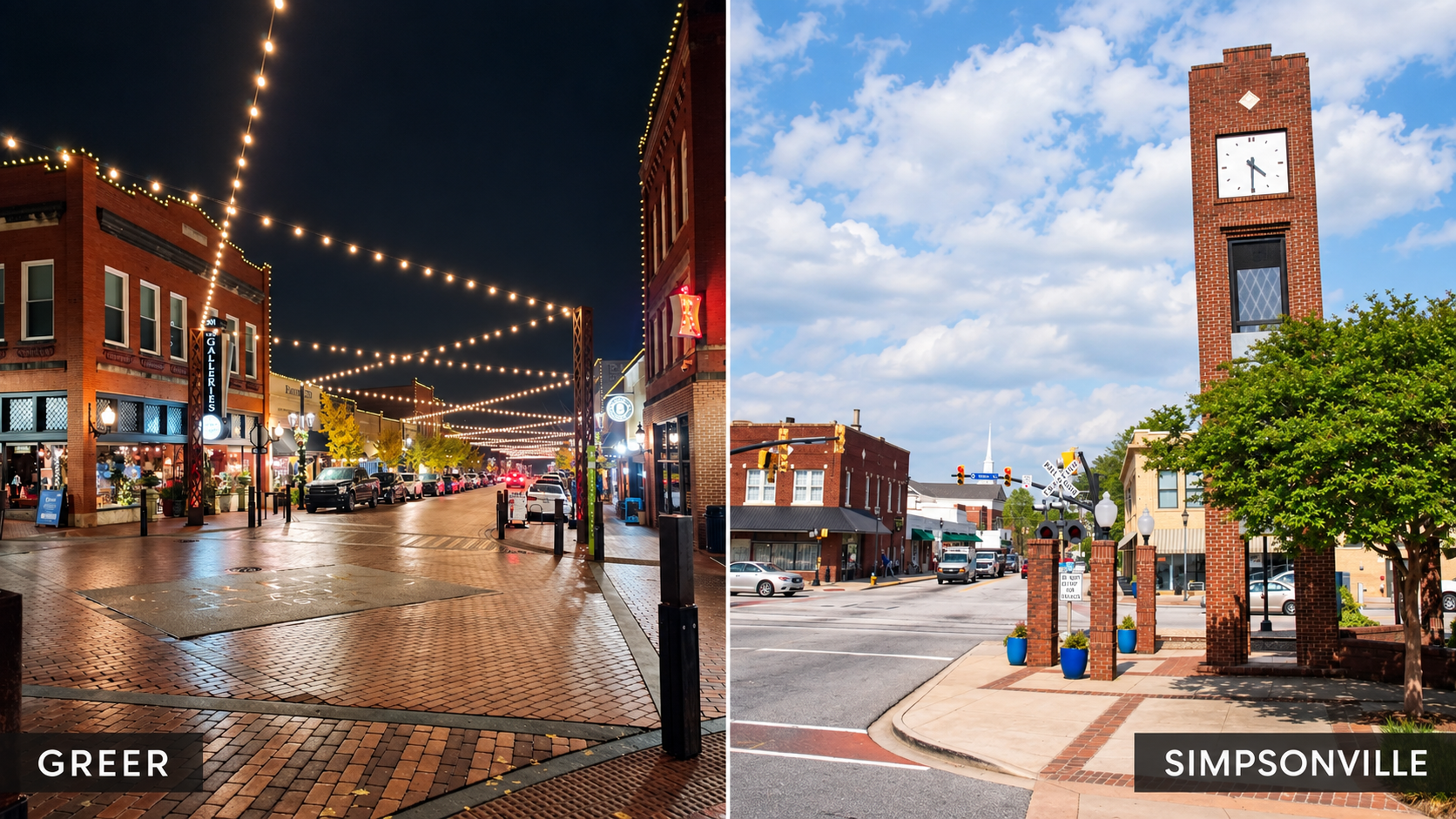
Downtown Greer is compact and easy to stroll. You can browse shops, find a place to eat, and spend time at Greer City Park, where the farmers market and community events bring people together. I especially enjoy the Christmas tree lighting. It’s the kind of event that makes downtown feel like a gathering place.
Closer to downtown, you’ll see smaller, older homes, including houses with a style that reminds me of the Upstate’s mill homes. Elsewhere in Greer, you can find established subdivisions, newer developments, new construction, and homes on larger pieces of land. A Greer address might put you close to Greenville’s Eastside, near downtown Greer, or farther out with a more country feel.
That range gives buyers choices, but it also means I would never suggest choosing a Greer home based on the city name alone.
What does Simpsonville feel like?
Simpsonville has variety too, with established neighborhoods, newer subdivisions, and homes with more land in some areas. In my experience, buyers are often drawn to the balance of residential neighborhoods and errands that are already easy to do nearby.
You can grocery shop, meet someone for coffee, or run several errands without leaving the area. Downtown Simpsonville has local places to visit, while Heritage Park adds concerts and community events to the mix.
Some buyers picture an established neighborhood with mature trees. Others want a newer home or a neighborhood with shared amenities. Simpsonville gives us options for each, but the part of Simpsonville you choose will affect your drives and your daily routine. If you want a closer look, read my guide to Simpsonville neighborhoods by lifestyle.
Homes: Is there a big difference?
There can be, depending on the neighborhoods you compare. But if you’re looking at newer subdivision homes, you may recognize similar floor plans and builders in both Greer and Simpsonville. You don’t have to decide between the two towns based on a particular style of new home.
The more helpful questions are: What surrounds the house? How far is it from the places you’ll visit every week? Does the street and neighborhood feel right to you?
Greer’s broad footprint means one home may be in an older area near downtown, another in a newer subdivision, and another on acreage. Simpsonville also offers a mix of established homes, new construction, neighborhoods with shared amenities, and some properties with more space. We can usually narrow the search faster once we know the kind of setting you want.
Errands, restaurants, and downtown time
Where you live in Greer determines which stores will be part of your routine. Wade Hampton Boulevard has many of the familiar stores, restaurants, and services you might use during the week. Downtown Greer gives you a different outing: a smaller place to walk around, shop, eat, and enjoy an event at City Park.
Simpsonville has plenty of everyday shopping and dining as well, including the Fairview Road area and downtown. If your main concern is having groceries and common errands nearby, either town could work. I’d look at the specific home address and map the trips you actually make, rather than assume one town is more convenient overall.
What about traffic and commuting?
I find Greer relatively easy to get around when I’m staying in the area. Wade Hampton can slow down depending on the time of day and the direction you’re traveling. The I-85 stretch around the Pelham Road and airport exits is another place I’d want a buyer to test during their usual travel time.
In Simpsonville, Fairview Road can feel congested, particularly when people are heading toward or coming from I-385. That’s one of the first things I mention to buyers who will make that drive regularly.
Neither town has one commute time that applies to every home. If you’re relocating for work, I recommend trying the drive from the neighborhoods you like at the time you would actually travel. A route that feels easy during a midday showing can feel different during your weekday commute.
Which one puts you closer to the outdoors?
If mountain trips, hiking, or drives toward Travelers Rest are a regular part of your plans, Greer may put you in a more convenient position, depending on which part of Greer you choose. That’s one reason I’d give Greer a closer look for a buyer who wants to spend a lot of weekends outdoors.
Simpsonville still gives you access to Upstate adventures. You’ll just want to consider how often you plan to make those drives and whether the extra time matters to you.
For families looking for a place to play closer to home, Greer also has Century Park and its Kids Planet playground. We took our nieces and nephews there before the more recent improvements. I haven’t been back with young children since, but it’s a park I still notice when we pass by.
So, should you choose Greer or Simpsonville?
I’d start with your routine, not a ranking.
Greer may be worth a closer look if you want to compare a wide range of home settings, spend time around its downtown, need access to destinations near Greenville’s Eastside, or expect frequent trips north toward outdoor activities.
Simpsonville may appeal more if the neighborhoods and shopping there fit the places you’ll visit most often, or if its mix of established communities and new construction feels right for your home search. You can explore more of its advantages and tradeoffs in my guide to living in Simpsonville.
Before committing to either one, look beyond the listing photos. Check the surrounding streets on Street View, then see them in person. Visit at different times if you can. Try the commute, stop at the grocery store you’d use, and picture an ordinary Tuesday there. In parts of the Upstate, the setting can change considerably from one street to the next.
We found our first Greer home without getting to do any of that homework, and fortunately, its location fit our life well. When I help buyers relocate now, I want them to have the chance to make that choice with a much clearer picture.
Weighing Greer against Simpsonville? Tell me what your week looks like and what you want from a home. I’d be happy to help you narrow the search to areas that make sense for you.
Check out this article next